

Perfect Plant Pairings: 5-Step Garden Design Formula (Zone 6A)
The Perfect Plant Pairing Formula: 3 Foolproof Garden Design Combinations (Zone 6A)
Have you ever brought home beautiful plants from the garden center, planted them carefully… and then stepped back thinking, Why doesn’t this look quite right?
If your plants are thriving but the design feels disconnected, the problem likely isn’t soil, sunlight, or watering.
It’s structure.
Today we’re sharing the 5-step plant pairing formula we use in our Zone 6A upstate New York garden to create layered, balanced, intentional garden vignettes that work season after season.
And yes, you can download the entire formula as a printable guide below.
Download the Free Plant Pairing Guide
We’ve turned this entire framework into a printable guide you can reference while designing your own beds and borders.
👉 Download the free Plant Pairing Guide here!
The 5-Step Perfect Plant Pairing Formula
Whether your garden style is bold and dramatic, romantic and cottage-inspired, or modern and structured, this formula stays the same.
1. Start With an Anchor Plant (Structure & Visual Weight)
Your anchor plant creates mass and presence.
It is usually:
- A shrub
- A substantial perennial
- Something with strong foliage
The anchor is what your eye lands on first. Without it, plantings can feel scattered and unintentional.
SEO note: Anchor shrubs like hydrangeas, smoke bush, and evergreen shrubs work especially well in Zone 6 gardens.
2. Add a Mid-Level Performer (Fullness & Bloom Power)
This supporting plant:
- Adds volume
- Softens transitions
- Extends bloom time
- Creates lushness
It should complement the anchor without competing for attention.
3. Build in Color Contrast (Depth & Visual Interest)
This is where the magic happens in garden design.
Think:
- Dark foliage next to light blooms
- Cool tones against warm tones
- Fine texture next to bold leaves
Contrast prevents a planting from looking flat and makes each plant stand out more.
4. Incorporate Movement (Energy & Seasonal Lift)
Movement adds life to your garden.
Use:
- Ornamental grasses
- Airy perennials
- Spiked bloom forms
- Pollinator-attracting plants
Especially in late summer, movement keeps plantings from feeling heavy.
5. Always Include an Evergreen Backbone (Year-Round Structure)
The evergreen element:
- Grounds the design
- Provides winter interest
- Prevents seasonal collapse
- Makes combinations look finished
Even the most romantic, airy garden vignette needs evergreen stability.
Real Garden Examples from Our Zone 6A Garden
Below are three planting combinations from our own upstate New York garden that demonstrate this formula in action.
Vignette 1: Bold Foliage and High Contrast
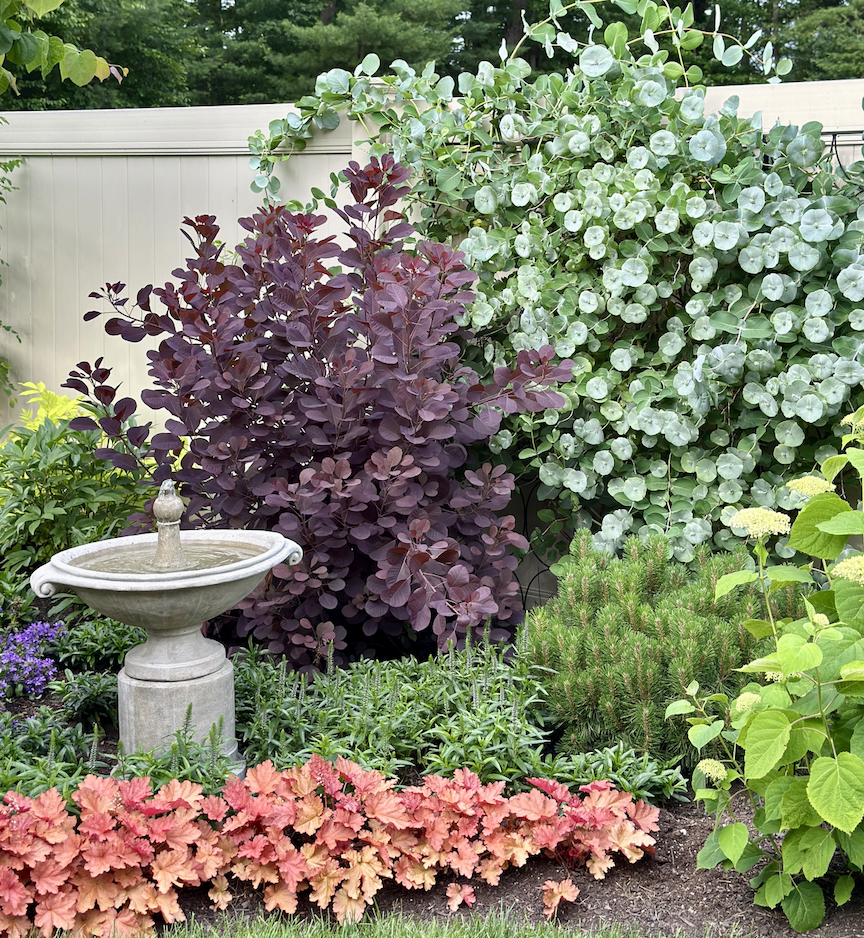
Anchor:
Winecraft Black Smoke Bush
Dark, rounded foliage provides strong visual weight and backdrop.
Mid-Performer:
Kinsley’s Ghost Honeysuckle
Silvery bracts and climbing habit add architecture and softness.
Color Contrast:
Peachberry Ice Coral Bells
Warm tones glow against the darker foliage.
Movement:
Magic Show ‘Ever After’ Veronica
Spiked blue blooms bring vertical energy and pollinators.
Evergreen Backbone:
Sprinter Boxwood
Keeps the vignette structured year-round.
Why this pairing works:
Dark + warm + cool + vertical + evergreen structure.
Vignette 2: Romantic, Airy, and Pollinator-Focused
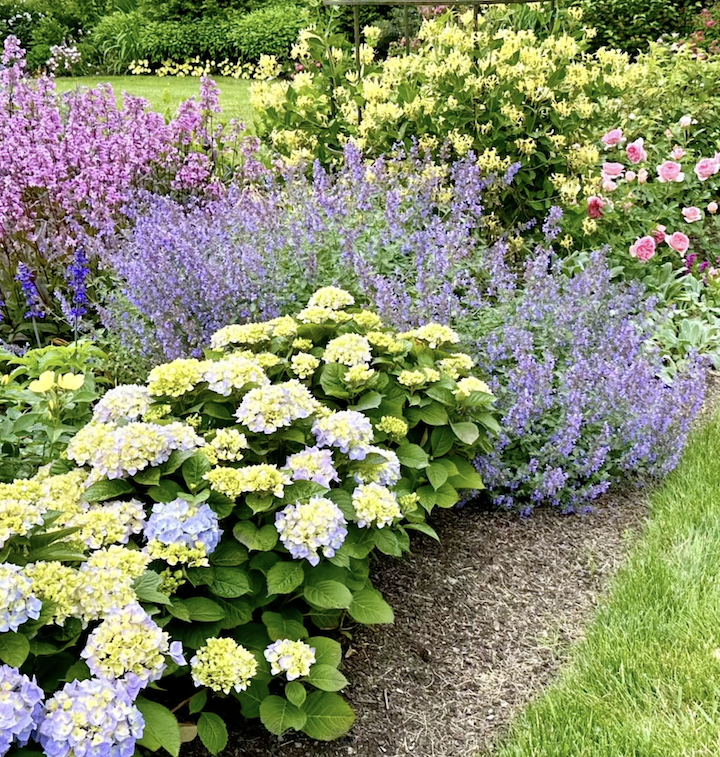
Anchor:
Let’s Dance Sky View Hydrangea
Compact, reblooming blue flowers with strong foliage presence.
Mid-Performer:
Tottering-by-Gently Rose
Buttery yellow blooms with airy structure.
Color Contrast:
Midnight Masquerade Penstemon
Dark foliage intensifies surrounding colors.
Movement:
Walker’s Low Catmint + Verbena bonariensis
Billowing texture and vertical lift.
Evergreen Backbone:
Boxwood or Inkberry Holly alternative.
Why this pairing works:
Blue + yellow + dark foliage + airy motion + evergreen stability.
Vignette 3: Compact, Modern Front Entry Planting
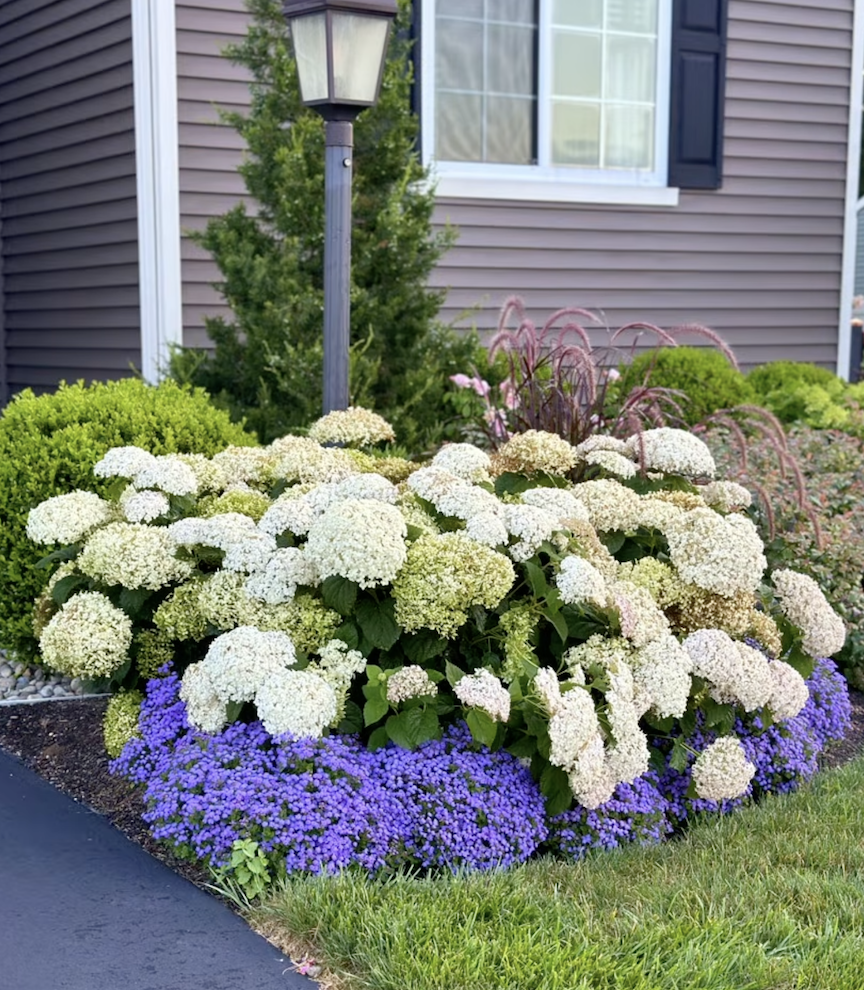
Anchor:
Invincibelle Wee White Hydrangea
Clean white blooms brighten the space from early summer to fall.
Mid-Performer:
Winter Gem Boxwood
Rounded evergreen form balances the hydrangea.
Color Contrast:
Artist Blue Ageratum
Vivid purple-blue hedge keeps the base from feeling heavy.
Movement:
Purple Fountain Grass
Soft plumes add vertical lift and seasonal drama.
Evergreen Vertical Structure:
Hetz Columnar Juniper
Draws the eye upward and softens architectural corners.
Why this pairing works:
White + blue + green + vertical evergreen = clean, modern impact.
How to Use This Formula in Your Own Garden
You do not need these exact plants.
Instead:
- Choose an anchor suited to your growing zone and light.
- Layer in a supporting perennial or shrub.
- Add foliage or bloom contrast.
- Include texture or movement.
- Finish with evergreen structure.
When you begin thinking in layers rather than individual plants, your garden will immediately feel more cohesive and professionally designed.
Download the Printable Plant Pairing Guide
Want to take this outside with you?
We created a printable guide that walks you through this exact framework step-by-step.
👉 Download the Plant Pairing Guide Here!
If you’re gardening in Zone 6A like we are, this formula works beautifully across hydrangea borders, foundation beds, cottage gardens, and modern plantings alike.
Let us know which vignette is your favorite — and as always,
Thanks for growing with us 🌿
Featured Products
Latest Garden Adventures

The Perfect Plant Pairing Formula: 3 Foolproof Garden Design Combinations (Zone 6A)
20 New Plants We’re Adding to Our Zone 6A Garden This Season
Must-Have Plants for the 2026 Garden (And a Few We’re Skipping)
Grow With Us All Season Long
Join our gardening community and receive seasonal tips, design inspiration, and exclusive content to help your garden thrive. From seed starting to full blooms, we'll share our journey with you.
