

RUDE Winter Garden Checklist for Zone 6A
The R.U.D.E. Winter Garden Checklist: How We Inspect Our Zone 6A Garden Before Spring

Winter in Zone 6A upstate New York can be brutal. This year? Cold. Windy. Relentless.
As spring inches closer, we head outside for what we call our R.U.D.E. Winter Garden Checklist — a simple way to evaluate winter damage, assess plant health, and start planning improvements before the growing season begins.
If you garden in a cold climate, this checklist will help you know what to look for right now.
R = Rabbits, Rodents & Deer Damage

Winter is prime time for wildlife to snack on your landscape.
Rabbit Damage
Last year, rabbits completely stripped the lower needles from our Tronar Blue Spruce, creating what we jokingly called a “raising its skirt” look.
How to identify rabbit damage:
- Clean 45-degree angled cuts on stems
- Missing needles on lower branches
- Small round rabbit pellets around the base
Regular winter inspections matter. When snow melts, damage becomes obvious — and the earlier you spot it, the better.
Deer Damage
Deer browse differently than rabbits. Instead of clean cuts, they:
- Tear foliage off with rough, jagged edges
- Target certain favorites (for us, it’s Quick Fire hydrangeas)
Installing a simple plastic mesh fence with T-posts made a noticeable difference this year. We may keep it up year-round.
Rodents & Voles
You may notice:
- Surface tunnels in mulch
- Runways under melting snow
- Chewed perennial crowns
Deep snow makes inspection tricky, but once it melts, look closely at the base of newly planted shrubs and perennials.
U = Under the Snow
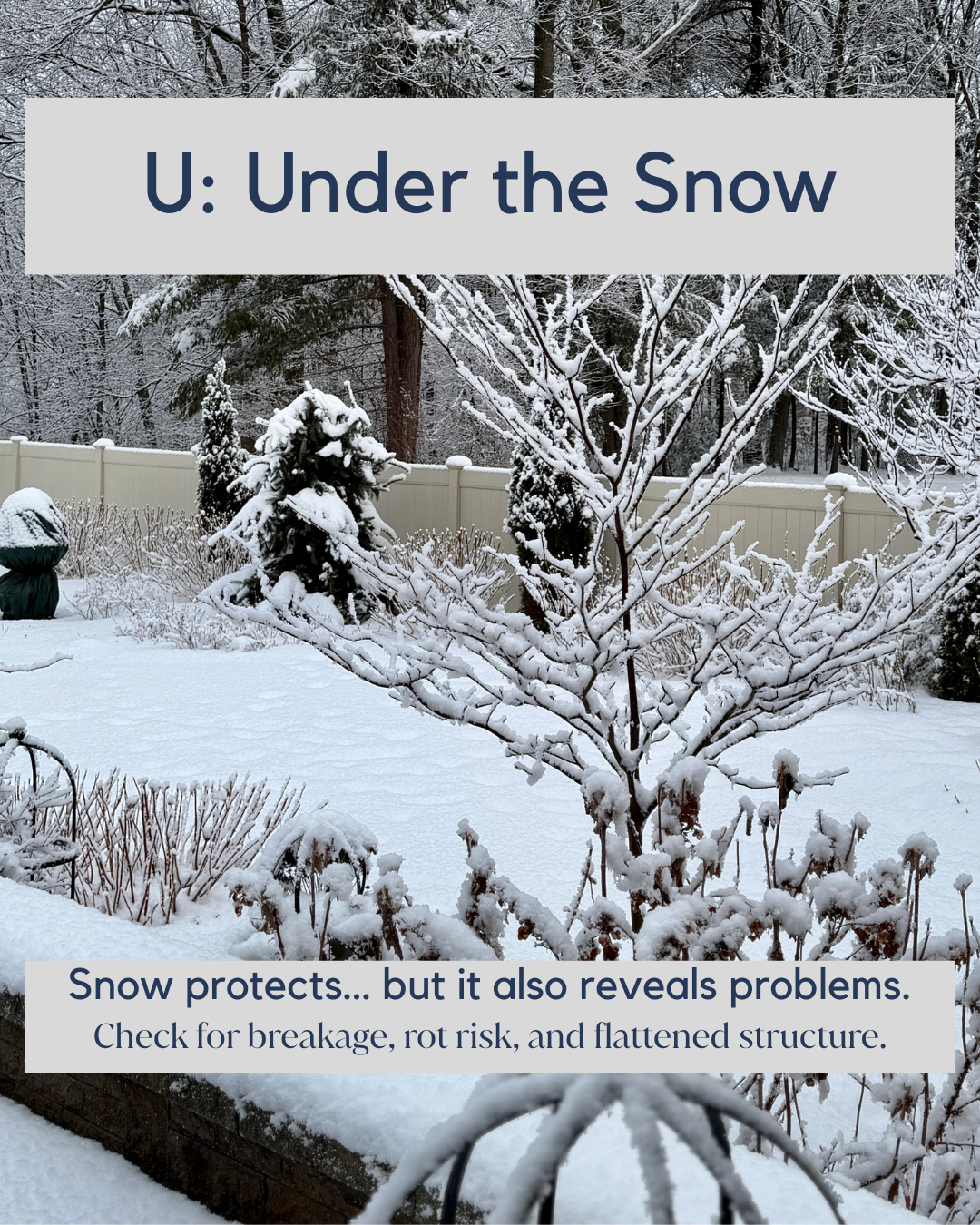
Snow is both protector and destroyer.
Snow Load Damage
Heavy, wet snow can:
- Split boxwoods
- Splay fast-growing shrubs like Sprinter boxwoods
- Snap weaker branches
If snow is light and fluffy, a leaf blower can help remove it.
If it’s heavy and icy, avoid hitting plants with brooms. Gently shake or carefully lift snow instead. Hitting frozen branches can cause more harm than good.
Snow as Insulation
Snow actually protects:
- Hydrangea crowns
- Newly planted perennials
- Marginally hardy plants
Our Let’s Dance Sky View hydrangeas are well insulated beneath the snowpack, which helps buffer against freezing winds.
Perennial Heaving
Freeze-thaw cycles can push newly planted perennials, especially heuchera, out of the soil.
If you notice this in early spring:
- Gently press them back into the ground
- Add fresh mulch
- Water once the soil has thawed
Often, they simply didn’t have enough time to root in before winter.
D = Dead or Damaged

This is the hardest part of winter inspection.
When an evergreen turns amber or bronze, ask:
- Is this normal winter bronzing?
- Or true winter burn?
- Or complete dieback?
Our dwarf Nordmann fir is currently glowing amber — not a promising sign.
The Scratch Test
Lightly scrape bark with your fingernail:
- Green underneath = alive
- Brown and dry = likely dead
Some evergreens bronze naturally in winter and recover beautifully in spring. Others do not.
If a plant is labeled Zone 6 and you’re gardening in 6A with strong winter winds, it may technically survive — but it might not thrive. Pushing zones with expensive evergreens can be risky.
Sometimes loss becomes opportunity — a chance to improve structure and choose something more reliable for your climate.
E = Evaluate Winter Interest

Winter reveals what your garden truly looks like without flowers.
Ask yourself:
- Where is the structure?
- Where is the evergreen backbone?
- What looks empty?
- What needs a statement tree?
Planning Improvements
We’re planning a new island bed shaped like a cashew around our Princeton Sentry ginkgo. This will:
- Break up open lawn space
- Add winter structure
- Include statement trees with bark interest
- Improve flow between pathways
Winter is the perfect time to design. You can see everything clearly.
Strengthening the Evergreen Backbone
We’re also considering adding:
- More deer-resistant Green Giant arborvitae
- Cold-hardy evergreens solidly rated for Zone 6A
- Structural conifers like Serbian spruce
Evergreens are investments. In cold climates, prioritize varieties that are truly hardy rather than borderline.
What Snow Does for Your Garden
Even after all this inspection, remember:
Snow:
- Insulates crowns
- Prevents root desiccation
- Provides slow-release watering as it melts
Winter damage is real, but so is winter protection.
Our Biggest Takeaways from This Winter
- Inspect regularly — even when it’s cold.
- Protect high-value plants from wildlife.
- Don’t overreact to bronzing until spring.
- Invest in hardy evergreens.
- Use winter to evaluate structure and plan improvements.
Spring is just weeks away. Now is the time to walk your garden and look closely.
Gardening in upstate New York is always an adventure — and even a rude winter can teach us something.
Thanks for growing with us 🌱
Featured Products
Latest Garden Adventures

The R.U.D.E. Winter Garden Checklist: How We Inspect Our Zone 6A Garden Before Spring
The Perfect Plant Pairing Formula: 3 Foolproof Garden Design Combinations (Zone 6A)
20 New Plants We’re Adding to Our Zone 6A Garden This Season
Grow With Us All Season Long
Join our gardening community and receive seasonal tips, design inspiration, and exclusive content to help your garden thrive. From seed starting to full blooms, we'll share our journey with you.
